GoGreenlight
Now is Our Time: Why Humanities Research is the Key to Future Innovation
Published online: 02.04.2022
GoGreenlight
Now is Our Time: Why Humanities Research is the Key to Future Innovation
Published online: 02.04.2022
GoGreenlight
Published online: 02.04.2022
GoGreenlight
Published online: 02.04.2022
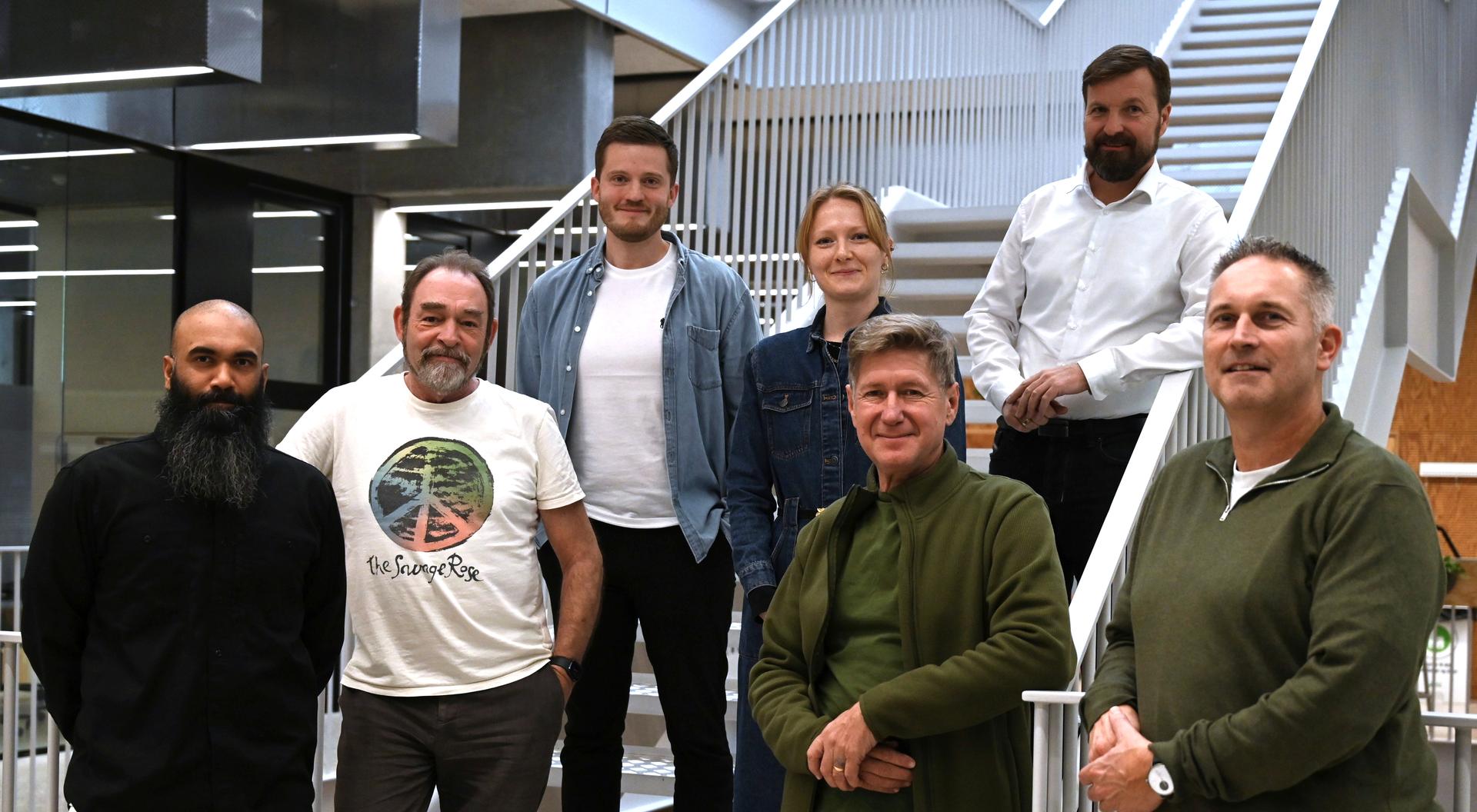
Photo: Louise Karin Hansen, AAU Kommunikation
Text: Frederik Bovbjerg, AAU INNOVATE
Forget the myth of the introverted researcher in the ivory tower. In a world where artificial intelligence is taking over the code, it is the humanist who holds the trump card. Meet Claus Rosenstand, who has transformed the "outcry from industry" into a global tech vision, and hear why SSH researchers are entering their golden era.
Imagine that the ultimate destination for your deep theoretical knowledge is not just another article, but the backbone of a solution saving an entire industry from drowning in complexity. For Claus Rosenstand, researcher and serial entrepreneur, this is not a dream. It is an imperative within his daily practice of "radical action research." His latest project, GoGreenlight, did not originate in a laboratory. It emerged because reality was crying out for help.
Listen to the "Outcry from Industry"
Innovation within the SSH fields is rarely about inventing a new gadget or pushing a shiny new product to the masses. It is about people. This is also the case for GoGreenlight. The story begins in the casting rooms of the film industry. Here, producers struggled with unmanageable spreadsheets, GDPR nightmares, and manual processes so complex they drained all creativity when casting roles for major series and film productions. "It is not because we found a technology that we thought should fit something," Claus explains. "It is because we saw a problem in practice, an outcry from the industry—a literal scream."
In response to this outcry, Claus, his co-founder Associate Professor Peter Vistisen, and their team are building a platform that digitizes and structures creative processes. They began by making actor casting smarter and more agile, but the vision is much larger: to optimize the process surrounding all forms of creativity, just as Google organizes the world's information. To succeed with this ambitious goal, the SSH researcher’s ability to understand human behavior, organizational needs, and cultural codes is precisely what is required.
The Humanist’s New Superpower: Semiotics as the New Python
Many humanists shy away from entrepreneurship because they believe they lack technical skills. However, that barrier is crumbling. According to Claus, AI has flipped the script in favor of the humanists. "We won't need programmers very soon," he says, somewhat provocatively. With the surge of AI tools like ChatGPT, Gemini, and Claude, anyone can learn to code or have an AI do it for them. Claus himself learned to program in Python by working with an AI, finding it faster and cheaper than "disturbing" an IT engineer.
The most important point here is that AI models are built on and operate through language. "With our semiotic understanding of language, we can describe exactly what we want, and then we get it," Claus explains, calling it a definitive "superpower" for SSH researchers. Where the engineer builds the architecture, the humanist understands the meaning, the context, and the etiquette. "Our time has come!" he declares.
Radical Action Research: Building Your Own Data
Does starting and running a company detract from research? On the contrary. Claus describes his approach as "radical action research." If you want to research the future or new organizational forms, you cannot always rely on observing what already exists. "You don't have access to data unless you create the reality where that data is generated," he points out. "Data about the future doesn't exist, so you can't use statistics when you're standing 'on the edge'."
By creating GoGreenlight, Claus and his colleagues gain unique access to study the development of creative processes in real time, in a way no other research method allows. Research and business are therefore not opposites; they are mutually dependent. Together, they allow the researcher to plan and think much further into the future than research alone could. Furthermore, Claus notes that the path of innovation offers a unique opportunity to build your own team—a discipline that creates freedom and one that SSH researchers are uniquely prepared for, as it centers on people and the interplay between them.
Just Get Started (and call an engineer)
You might be thinking: "But I don't know anyone who has the skills I'm missing to move forward." Claus’s answer is simple. When someone asked him how he got hold of the engineers, he replied: "I picked up the phone and called them." The barrier is often cultural or personal, not practical. SSH researchers have been used to others making and building things while the researchers thought them up. That era is over.
"Get started!" is the clear advice from Claus. You don't have to quit your job tomorrow. Aalborg University provides facilities like INNOVATE, which Claus describes as one of the world's best "protected workshops" for aspiring entrepreneurs. Here, you can find sparring and help with anything you might doubt, test your ideas, find partners, and perhaps help save humanity by ensuring we maintain control over creativity in an AI-dominated age. Your research has the potential to change reality. It simply requires the courage to take that first small step toward innovation.